Nvidia Succession Talk: What a CEO Change Would Mean for AI API Builders
Nvidia has no public succession plan and its CEO is under pressure. Here is what a leadership shake-up could mean for teams building on LLM APIs.
What the Report Actually Says
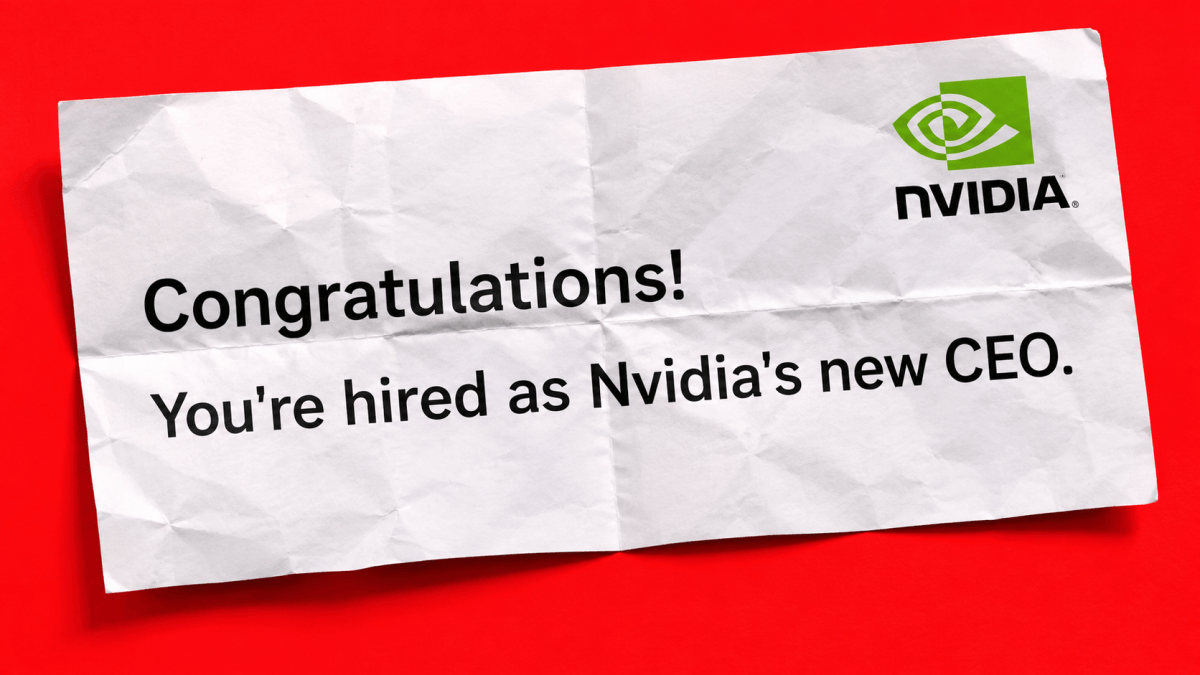
TechCrunch published a piece that openly labels itself a highly unscientific list of people who could replace Jensen Huang as Nvidia's chief executive. The framing matters: this is speculation dressed as a thought experiment, not reporting on a board search or an announced transition.
The article's premise rests on two claims: that Nvidia has no succession plan, and that its CEO is under pressure. Both are presented as the outlet's characterization. Readers should treat them as reported commentary rather than confirmed company positions, since no official Nvidia statement on succession is cited.
Why LLM API Teams Should Care at All
Most developers building with LLM APIs never touch a GPU directly. They call an endpoint, get tokens back, and pay per request. But the economics underneath that endpoint depend heavily on Nvidia hardware, because a large share of the cloud capacity used to train and serve models runs on its accelerators.
That means Nvidia's leadership, roadmap, and pricing posture indirectly shape what inference costs. A leadership change is not a reason to panic, but it is a reminder that the layer beneath your API provider is not static. Supply constraints, allocation decisions, and pricing shifts can ripple up to your bill.
Design for Portability, Not Predictions
Nobody can forecast a CEO transition, and betting your architecture on one is a bad use of engineering time. What you can do is reduce the cost of being wrong. Keep model access behind a thin internal interface so swapping providers is a config change rather than a refactor.
Track latency and cost per provider in your own telemetry instead of relying on vendor dashboards. When a provider's pricing or availability moves, you want data that tells you whether to shift traffic. Aggregation layers and multi-provider routing exist precisely to make this kind of substitution cheap.
What to Watch Instead of the Shortlist
Rather than tracking speculative successor lists, watch the signals that actually affect your stack: changes to accelerator allocation for major clouds, shifts in per-token pricing, and whether your provider publishes fallback behavior when capacity is tight. Those are measurable.
If a leadership change ever does happen, the useful question is whether the new direction changes supply commitments or pricing strategy. Until then, the shortlist is entertainment for industry watchers, not an input to your capacity planning.
FAQ
Does this mean Nvidia is definitely changing CEOs?
Should I change my LLM API provider because of this?
How do I make my app less dependent on one hardware or cloud vendor?
References
Call these models through one gateway
Admesh provides a unified OpenAI-compatible API: one Base URL and one key for Claude, GPT, DeepSeek and more. New accounts get trial credit that never expires.