AI Is Speeding Up AI Research, and That Changes the API Playbook
A viral essay argues AI is dramatically accelerating AI research itself. Here is what that means for developers building on LLM APIs.
What the essay actually claims
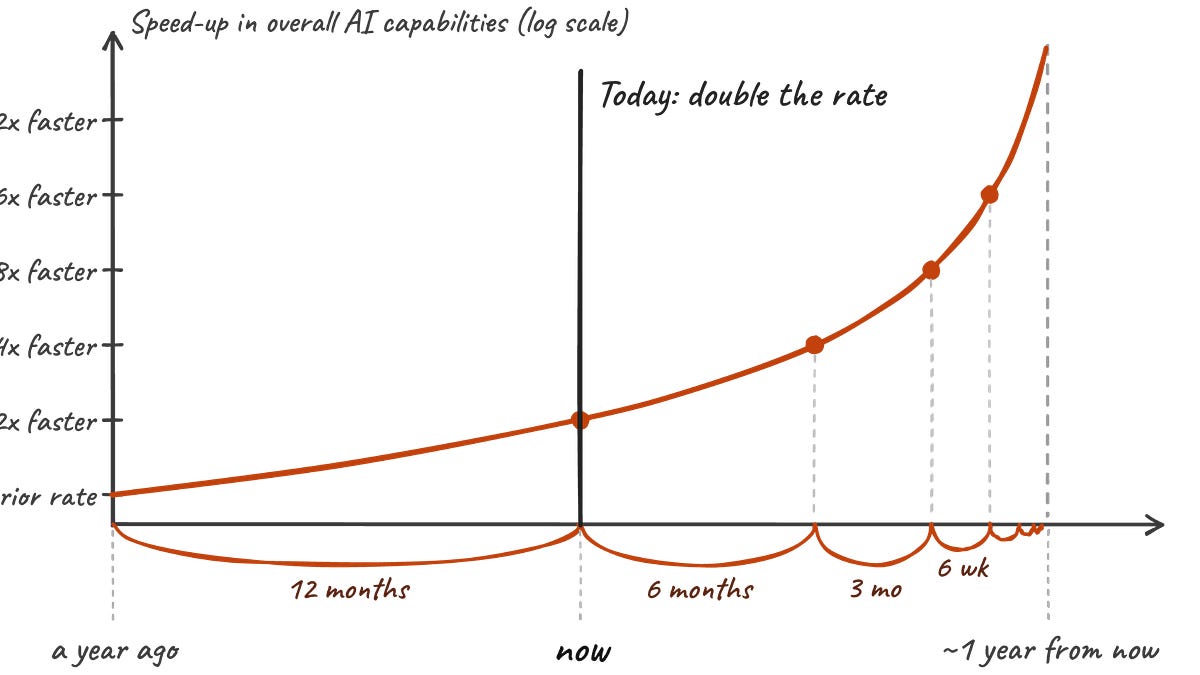
The essay's central argument, as reported, is that AI systems are now contributing to the pace of AI research in a way that is hard to ignore. Rather than framing progress as steady, it suggests a feedback loop in which better tools help produce the next round of improvements faster.
The piece drew substantial attention on Hacker News, where it accumulated hundreds of points and a long comment thread. That reaction is itself a signal: the claim lands as either obvious or overstated depending on who is reading it.
Why the claim is hard to prove
Acceleration is easy to assert and hard to measure. Research output, model release cadence, and benchmark scores all move for many reasons, including funding, hardware supply, and shifting research priorities. Attributing a speedup specifically to AI assistance requires careful controls that the provided summary does not describe.
Commenters on the thread appear to have pressed on exactly this point, questioning how one separates genuine acceleration from the usual hype cycle. Treat the claim as a reported argument rather than a settled finding.
What it means for teams building on LLM APIs
If the pace of model improvement is genuinely compressing, the practical consequence for developers is shorter shelf life for any hard-coded assumption. Prompts tuned to a specific model version, token budgets sized to a particular context window, and evaluation suites built around last quarter's behavior all age faster.
A vendor-neutral response is to keep model access behind a thin abstraction layer, log inputs and outputs so you can re-run evaluations against new versions, and treat prompt templates as versioned artifacts. None of that depends on which provider you use, and all of it pays off when a model swap becomes necessary.
Cost and latency planning under uncertainty
Faster research cadence often arrives alongside pricing and latency changes, in both directions. Teams that hard-code a single model's cost profile into unit economics can be caught out when a cheaper or faster tier appears, or when a previously cheap model is deprecated.
A practical habit is to route by task difficulty: send simple classification and extraction work to smaller, cheaper models and reserve larger models for reasoning-heavy steps. That pattern survives most model churn and keeps spend tied to actual task needs rather than to a single vendor's current lineup.
Reading the discourse critically
The Hacker News thread is worth skimming not for a verdict but for the objections. Skeptical readers tend to ask what would falsify the acceleration claim, which is a healthy question to bring to any vendor announcement about model capability.
For engineering teams, the useful posture is neither dismissal nor adoption on faith. Watch what changes in your own evaluations, keep a baseline, and let measured results rather than narrative decide when to migrate.
FAQ
Does the essay provide hard numbers on research acceleration?
Should I switch models because of this?
Why did this post get so much attention?
References
Call these models through one gateway
Admesh provides a unified OpenAI-compatible API: one Base URL and one key for Claude, GPT, DeepSeek and more. New accounts get trial credit that never expires.