
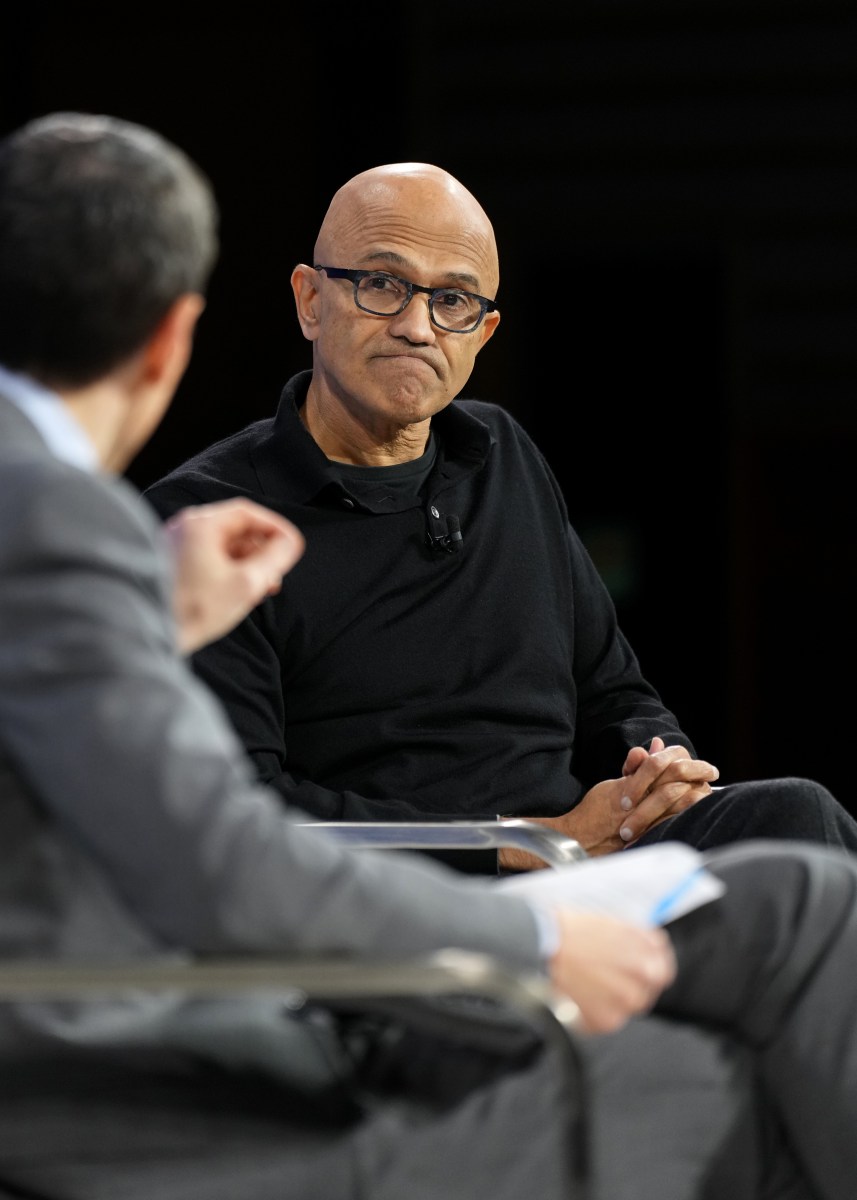
Nadella Says Much Critical Infrastructure Is Unpatchable as AI Cyber Risks Grow
Microsoft CEO Satya Nadella says large parts of critical infrastructure cannot be patched, as AI raises both security opportunities and new risks.
What Nadella actually said
Speaking publicly, Microsoft CEO Satya Nadella reportedly argued that many parts of the connected world, particularly critical infrastructure, are unpatchable in any practical sense. The remark was made against a backdrop of rising concern about AI-enabled cyberattacks, per TechCrunch.
The framing matters. It is not a claim that nothing can be fixed, but a recognition that legacy industrial systems, long-lived devices, and fragmented operational technology often cannot receive updates the way modern software can. Nadella also downplayed the recent Outlook outage, suggesting it should not be read as evidence of a systemic collapse.
Why unpatchable systems are a hard problem
A patch assumes you control the software, can reach the device, and can afford downtime. In critical infrastructure, at least one of those assumptions usually fails. Equipment may run firmware that is years or decades old, and operators may be unable to reboot systems without disrupting essential services.
That is why security teams increasingly lean on segmentation, monitoring, and least-privilege access rather than patching alone. AI fits into this picture as a defensive tool, but it also lowers the cost of finding weaknesses in exactly these environments.
The dual-use reality of AI in security
Nadella's comments reflect a view many security researchers share: the same models that help defenders triage alerts and spot anomalies can help attackers probe systems faster. The net effect depends less on the model and more on how it is deployed and governed.
For organizations, this argues for treating AI as part of the security stack rather than a separate project. Logging, access control, and incident response still do most of the work; AI can accelerate them but cannot substitute for them.
What this means for teams building on LLM APIs
If you are shipping features on top of LLM APIs, the unpatchable-infrastructure discussion is a reminder that your own dependencies deserve the same scrutiny. Model providers update, deprecate, and change behavior over time. Version pinning, fallback routes, and evaluation suites are practical hedges.
Vendor-neutral design helps here. Routing through an aggregation layer, keeping prompts and outputs logged for audit, and testing against multiple models reduces the blast radius when any single provider changes. It also makes it easier to respond when a security incident forces a fast switch.
The takeaway
Nadella's point is less about pessimism than about realism. Some systems will never be fully patched, so resilience has to come from architecture, monitoring, and people. AI will be part of that answer, but only alongside fundamentals that no model can replace.
Частые вопросы
Did Nadella say critical infrastructure cannot be secured at all?
How does this affect developers using LLM APIs?
Is AI making cyberattacks worse?
Источники
Вызывайте эти модели через один шлюз
Admesh предоставляет единый API, совместимый с OpenAI: один Base URL и один ключ для Claude, GPT, DeepSeek и других моделей. Новым аккаунтам доступен пробный кредит без срока действия.